

How Do Advanced Rubber Molds Deliver Greater Precision, Durability, and Future Manufacturing Value?
2025-11-21
Rubber molds are engineered forming tools designed to shape raw rubber materials into consistent, high-precision components used across automotive, industrial, medical, aerospace, and consumer product sectors. As global industries shift toward higher accuracy, reduced waste, faster production cycles, and multi-material compatibility, the role of high-performance rubber molds becomes increasingly central.
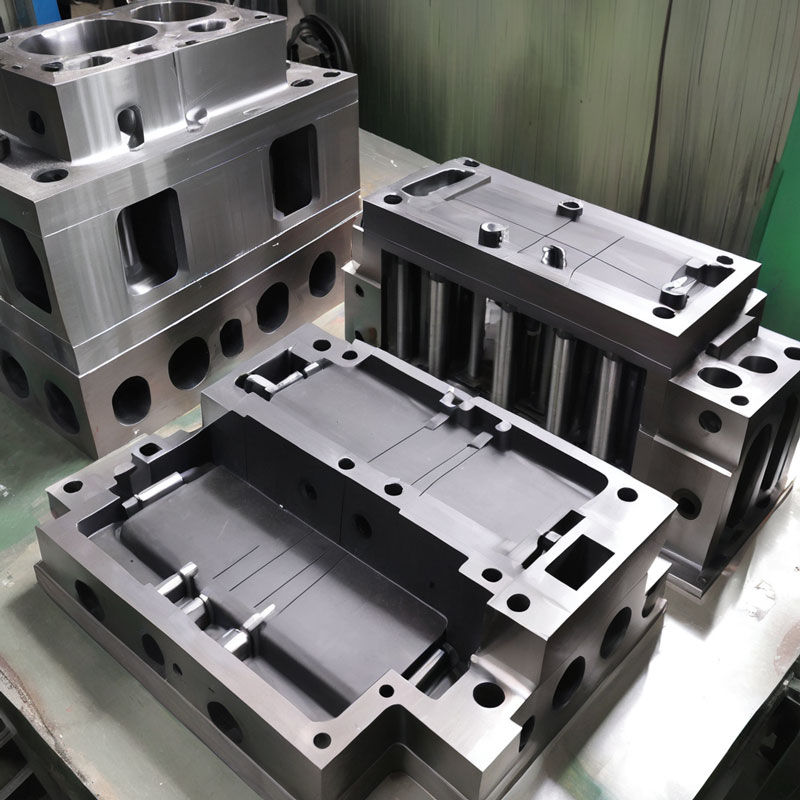
At the core of industrial molding operations, rubber molds ensure the dimensional accuracy, stability, and repeatability of finished rubber products—attributes essential for sealing components, vibration-dampening parts, gaskets, household items, and complex engineered assemblies. The objective of this content is to explore product specifications, key functions, emerging trends, and practical insights that reflect real manufacturing demands.
Below is a concise table summarizing common technical parameters used to evaluate a high-quality rubber mold:
Rubber Mold Technical Parameters
| Parameter | Description |
|---|---|
| Material Composition | Steel types such as P20, H13, S136, 420 stainless steel depending on durability and corrosion-resistance needs |
| Hardness Level | Typically 48–52 HRC after heat treatment for high wear resistance |
| Production Method | CNC machining, EDM, wire cutting, polishing, surface treatment |
| Tolerance Accuracy | ±0.01–0.05 mm depending on product complexity |
| Mold Cavity Count | Single cavity / multi-cavity options depending on production volume |
| Surface Finish Grade | Standard, mirror finish, or textured finish |
| Cooling System Design | Internal channels for stable temperature control |
| Compatible Rubber Types | Silicone rubber, EPDM, SBR, NBR, neoprene, fluororubber (FKM) |
| Estimated Lifecycle | 300,000 to over 1 million cycles based on usage and maintenance |
| Application Range | Automotive seals, O-rings, medical parts, industrial gaskets, consumer goods |
These specifications determine mold performance, lifespan, and product quality, influencing cost efficiency and operational output for manufacturers.
Why Are Rubber Molds Critical for Consistency, Cost Efficiency, and Reliability in Mass Production?
Rubber molds enable manufacturers to achieve controlled shaping, consistent geometry, and material stability during the vulcanization or curing process. They also reduce production variability, minimize defect rates, and optimize raw material usage—a significant benefit for industries managing large production volumes. The following factors explain why high-grade rubber molds have become indispensable.
Precision and Consistency
High-quality rubber molds deliver uniform part dimensions across thousands of cycles. This is essential for components such as O-rings, gaskets, and dampers, where even subtle deviations may lead to functional failure.
Durability and Long Service Life
Heat-treated steel materials, combined with surface finishing technologies, allow molds to withstand high temperatures, pressure, and chemical exposure. This extends mold lifespan and reduces downtime.
Cost Control
Accurate molds reduce scrap rates and rework, helping factories maintain competitive production costs over long-term manufacturing campaigns.
Enhanced Productivity
Multi-cavity mold designs increase output without additional labor or machine investment. Faster cycle times and automated demolding systems further improve overall efficiency.
Design Flexibility
Modern rubber molds support a wide range of rubber materials, enabling engineers to tailor products for flexibility, chemical resistance, hardness, or high-temperature performance.
Safety and Quality Assurance
Products produced using advanced molds exhibit stable mechanical properties, improved sealing capability, and consistent elasticity. This is crucial for industries that demand absolute reliability.
These attributes collectively illustrate why rubber molds are not only functional tools but strategic assets for competitive manufacturing environments.
How Are Rubber Molds Manufactured and What Innovations Shape Their Future Development?
The production of rubber molds involves multi-stage engineering processes that combine material science, precision machining, and structural design. Modern mold innovation continues to evolve, introducing technologies that enhance accuracy, extend service life, and support greener, more efficient manufacturing.
Key Steps in Rubber Mold Manufacturing
Material Selection
High-grade steel such as H13 or S136 is chosen based on processing temperatures, abrasion levels, and corrosion exposure. Stainless steel options are used for silicone molding due to their resistance to gas corrosion.
Engineering and Structural Design
Computer-aided design (CAD) and simulation techniques map mold flow, curing behavior, and shrinkage rates. This ensures optimal part deformation control and improved surface performance.
Precision Machining
CNC milling, EDM, wire-cutting, and micro-drilling create intricate cavity structures with high dimensional accuracy.
Surface Treatment
Processes such as nitriding, chrome plating, polishing, and texturing contribute to achieving desired surface finishes while reducing friction and wear.
Cooling/Heating Integration
Temperature is controlled through water channels or cartridge heaters to maintain stable rubber curing conditions.
Assembly and Testing
Engineers verify alignment, smooth demolding, material flow uniformity, and mechanical robustness.
Emerging Trends Shaping the Future of Rubber Mold Technology
Smart Mold Technology
Sensors integrated into molds allow real-time monitoring of temperature, pressure, and curing cycles—leading to more consistent output and reduced defect rates.
AI-Assisted Mold Design Simulation
Advanced simulation predicts material flow, shrinkage, and stress distribution, enhancing mold accuracy and reducing development time.
Sustainable Materials and Energy Efficiency
Eco-friendly materials, waste-reducing process optimization, and low-energy curing systems are becoming standard.
High-Precision Micro Molding
Demand for miniature and complex components in medical and electronic industries drives the development of ultra-fine cavity molds.
Modular Mold Systems
Interchangeable components reduce downtime and increase flexibility in production lines.
These innovations collectively push rubber mold manufacturing toward higher precision, greener processes, and smarter automation.
What Common Questions Do Manufacturers Ask About Rubber Molds?
Q1: How long can a high-quality rubber mold typically last?
A1: The lifespan of a rubber mold varies depending on steel grade, surface treatment, and production conditions. Under proper maintenance and standard operating temperatures, a high-grade mold can last between 300,000 and over 1 million cycles. Mold longevity increases significantly when regular cleaning, lubrication, temperature control, and inspection routines are applied. Additionally, using high-purity rubber compounds helps reduce cavity wear and chemical corrosion.
Q2: What factors influence the pricing of a rubber mold?
A2: Several variables affect mold pricing, including steel grade, cavity quantity, product complexity, surface finish requirements, and whether the mold needs specialized inserts, sliders, or automatic demolding mechanisms. High-precision molds require extensive CNC machining and tight tolerances, which increases cost but ensures better long-term productivity. Manufacturers should consider total lifecycle value rather than upfront cost when selecting molds.
How Do Professional Rubber Molds Support Industrial Growth and Product Quality?
Rubber molds remain foundational to global manufacturing systems, enabling industries to produce stable, precise, and high-performance rubber components with confidence. As industries evolve toward automation, sustainability, and digital optimization, rubber mold technology continues to advance—offering smarter monitoring systems, enhanced material resistance, micro-precision capabilities, and faster molding cycles.
Enterprises seeking reliable, long-lasting, and technically superior rubber molds benefit from partnering with specialized manufacturers capable of delivering tailored mold solutions backed by engineering expertise. Among these suppliers, SLD RUBBER provides comprehensive mold development services, combining high-grade materials, precision machining, and application-specific engineering to meet diverse manufacturing needs.
For project inquiries, mold customization, or technical consultation, contact us to explore high-quality solutions designed to optimize your production performance and long-term value.
