

How Does a Mine Air Pipe Rubber Tube Support Underground Ventilation Systems?
2026-01-04
Article Abstract
Mine Air Pipe Rubber Tube is a core component in underground ventilation systems, designed to deliver fresh air and discharge contaminated airflow in mining environments. This article provides a comprehensive and technical overview of Mine Air Pipe Rubber Tube, focusing on structural design, material composition, performance parameters, installation logic, operational adaptability, and long-term industry direction.
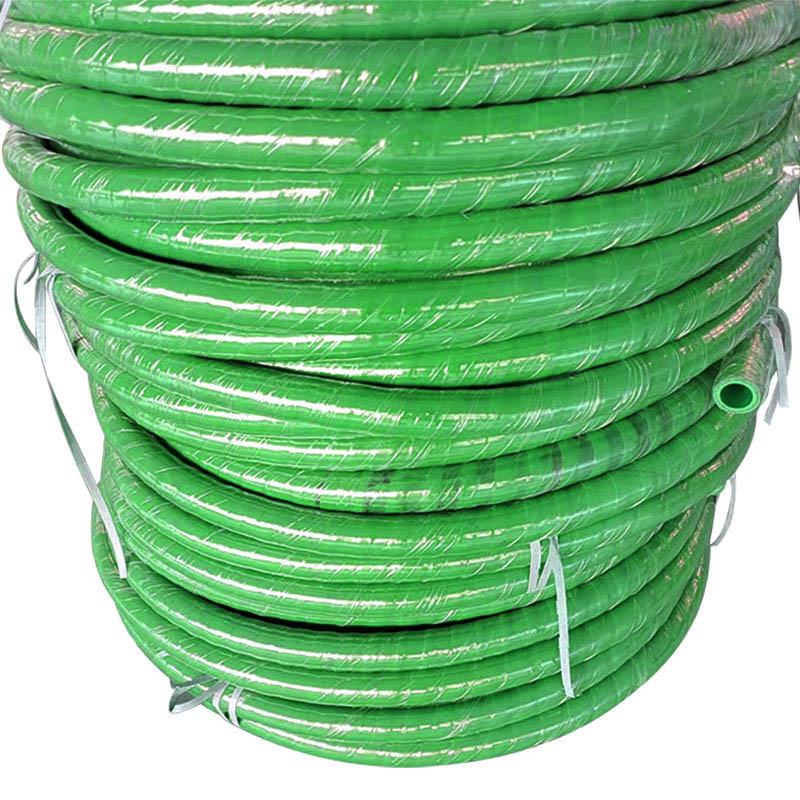
Table of Contents
- 1. How Is Mine Air Pipe Rubber Tube Designed for Underground Ventilation?
- 2. How Do Technical Parameters Define Performance and Reliability?
- 3. How Is Mine Air Pipe Rubber Tube Applied Across Mining Scenarios?
- 4. How Will Mine Air Pipe Rubber Tube Evolve with Mining Industry Requirements?
- Common Questions and Answers
- References
Outline
- Product overview and functional positioning
- Structural and material analysis
- Detailed technical specifications
- Operational logic and application scenarios
- Industry compliance and standards
- Frequently asked technical questions
- Brand positioning and contact guidance
1. How Is Mine Air Pipe Rubber Tube Designed for Underground Ventilation?
Mine Air Pipe Rubber Tube is engineered to operate in confined underground environments where airflow stability, mechanical strength, and environmental resistance are critical. The product functions as a flexible ventilation conduit, connecting axial or centrifugal ventilation fans to working faces, tunnels, and shafts. Its primary purpose is to ensure continuous air circulation, enabling the dilution and removal of dust, gas, heat, and exhaust emissions generated during mining activities.
From a structural perspective, Mine Air Pipe Rubber Tube typically consists of a multi-layer composite design. The inner rubber layer is formulated to provide low airflow resistance and strong airtightness, minimizing leakage during long-distance air delivery. Reinforcement layers, commonly made of high-strength polyester or nylon fabric, are embedded to enhance tensile strength and pressure resistance. The outer rubber layer is designed to withstand abrasion, moisture, and chemical exposure common in underground mines.
The design philosophy emphasizes adaptability. Flexible geometry allows the tube to follow irregular tunnel paths without compromising airflow continuity. Connection ends are usually equipped with reinforced cuffs or steel rings to ensure compatibility with standard ventilation fittings and to simplify installation and dismantling processes.
2. How Do Technical Parameters Define Performance and Reliability?
Technical parameters are decisive indicators of how a Mine Air Pipe Rubber Tube performs under real operating conditions. These parameters directly influence airflow efficiency, service life, and safety compliance. The following table summarizes representative specifications commonly required in mining ventilation projects.
| Parameter | Typical Range | Technical Significance |
|---|---|---|
| Inner Diameter | 300 mm – 1600 mm | Determines airflow volume and compatibility with ventilation fans |
| Wall Thickness | 3 mm – 8 mm | Affects pressure resistance and mechanical durability |
| Working Pressure | 0.05 – 0.3 MPa | Defines suitability for forced or exhaust ventilation systems |
| Tensile Strength | ≥ 8 MPa | Ensures resistance to deformation during suspension and operation |
| Elongation at Break | ≥ 300% | Supports flexibility and impact absorption |
| Temperature Resistance | -30°C to +80°C | Maintains stability in variable underground climates |
Each parameter is interconnected. For example, an increase in diameter enhances airflow capacity but also requires higher tensile reinforcement to prevent sagging. Similarly, wall thickness must balance flexibility and pressure resistance to ensure efficient ventilation without excessive weight.
Compliance with mining safety standards, such as flame retardancy and antistatic performance, is also reflected in material formulation and testing protocols. These characteristics are essential in gassy or coal mining environments where ignition risk must be minimized.
3. How Is Mine Air Pipe Rubber Tube Applied Across Mining Scenarios?
Mine Air Pipe Rubber Tube is widely used in metal mines, coal mines, non-metallic mineral extraction, and underground construction projects. Its application logic is based on ventilation distance, airflow direction, and operational phase.
During tunneling and heading operations, the tube is typically suspended along the roof or sidewalls to deliver fresh air directly to the working face. In large-section tunnels, multiple tubes may be arranged in parallel to meet airflow demand. For exhaust ventilation, the same structure can be reversed to remove polluted air from confined zones.
In deep mining operations, where ventilation resistance increases with depth, Mine Air Pipe Rubber Tube must maintain airtight joints and stable cross-sectional geometry to prevent airflow loss. Its flexibility allows rapid extension as excavation progresses, supporting continuous production without frequent system reconfiguration.
Maintenance logic also plays a role in application. Modular lengths and standardized connectors simplify replacement of damaged sections, reducing downtime. The tube’s resistance to moisture and corrosion makes it suitable for humid or water-rich underground conditions.
4. How Will Mine Air Pipe Rubber Tube Evolve with Mining Industry Requirements?
The future development of Mine Air Pipe Rubber Tube is closely aligned with changes in mining technology and regulatory frameworks. As mines move toward deeper, more automated, and environmentally controlled operations, ventilation systems are expected to become more intelligent and efficient.
Material innovation is a key direction. Advanced rubber compounds with enhanced flame retardancy, lower weight, and extended service life are increasingly adopted. Reinforcement structures are being optimized to reduce energy consumption by minimizing airflow resistance while maintaining mechanical strength.
Another development trend is standardization and customization balance. While standardized diameters and connectors improve global compatibility, customized pressure ratings and material formulations allow adaptation to specific geological and climatic conditions.
Sustainability considerations are also influencing design choices. Recyclable materials and longer replacement cycles contribute to reduced operational waste and lower total cost of ownership for mining enterprises.
Common Questions and Answers
How is Mine Air Pipe Rubber Tube different from rigid ventilation ducts?
Mine Air Pipe Rubber Tube offers higher flexibility and easier installation in irregular underground tunnels. Its elastic structure allows quick extension and repositioning, whereas rigid ducts require precise alignment and more complex support systems.
How should Mine Air Pipe Rubber Tube be selected for different mine depths?
Selection should consider airflow volume, ventilation distance, and pressure requirements. Deeper mines typically require thicker walls and higher tensile reinforcement to maintain structural stability and airtightness under increased pressure.
How does maintenance affect the service life of Mine Air Pipe Rubber Tube?
Regular inspection of joints, suspension points, and surface wear significantly extends service life. Prompt replacement of damaged sections prevents airflow leakage and reduces stress on adjacent tube segments.
References
- International Labour Organization – Safety and Health in Underground Mining
- Mine Ventilation Services Inc. – Fundamentals of Mine Ventilation
- ISO Standards for Rubber Hoses and Ventilation Ducts
As a specialized manufacturer and supplier in the field of industrial rubber ventilation products, Fushuo integrates material engineering expertise with practical mining requirements to deliver reliable Mine Air Pipe Rubber Tube solutions. Product development focuses on performance consistency, safety compliance, and adaptability across diverse underground environments.
For detailed technical consultation, customized specifications, or project-based recommendations, contact us to discuss how Mine Air Pipe Rubber Tube solutions can be aligned with specific ventilation system requirements.
