
How Does Moisture Absorption Affect the Dimensional Stability of Torlon Machined Parts
2026-04-07
Torlon Machined Parts are widely recognized for their exceptional strength, thermal resistance, and creep resistance. However, one critical factor that engineers must evaluate is moisture absorption. Guangzhou Ideal has extensive experience in producing high-precision Torlon Machined Parts and understands how environmental moisture can influence dimensional stability over time.
Torlon is a polyamide-imide (PAI) material that absorbs a small percentage of moisture when exposed to humid conditions. Unlike nylon, which swells significantly, Torlon exhibits minimal but measurable dimensional changes. Moisture absorption primarily affects the amorphous regions of the polymer, leading to slight expansion. For most general applications, this change is negligible. However, in precision components such as bushings, valve seats, and electrical connectors, even micron-level shifts can impact fit, clearance, or performance.
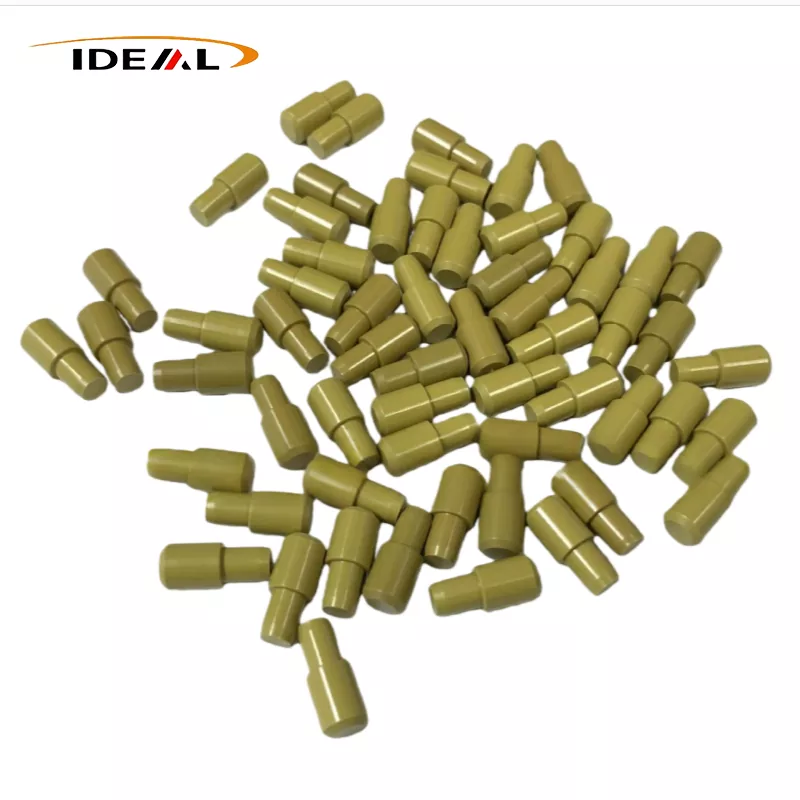
The table below summarizes the typical moisture absorption behavior of Torlon grades:
| Torlon Grade | Saturation Point (in 50% RH) | Saturation Point (immersion) | Coefficient of Moisture Expansion (cm/cm per % moisture) |
|---|---|---|---|
| Torlon 4203L | 0.3 – 0.4% | 0.9 – 1.1% | ~1.5 x 10⁻⁵ |
| Torlon 4301 | 0.3 – 0.4% | 0.8 – 1.0% | ~1.4 x 10⁻⁵ |
| Torlon 4501 | 0.3 – 0.5% | 1.0 – 1.2% | ~1.6 x 10⁻⁵ |
To put this into perspective, a Torlon Machined Part measuring 100 mm in length would expand approximately 1.5 to 2 microns per 0.1% moisture gain. This level of change is acceptable for most mechanical assemblies but requires compensation in ultra-tight tolerances below 10 microns.
Key factors influencing moisture-related dimensional shifts include:
-
Relative humidity of the operating environment – Higher humidity accelerates absorption.
-
Part geometry – Thin-walled sections absorb and release moisture faster.
-
Machining residual stresses – Annealed parts show more stable behavior.
-
Surface finish – Smoother surfaces reduce moisture ingress rate.
Guangzhou Ideal recommends post-machining conditioning or drying steps when Torlon Machined Parts are destined for high-humidity or vacuum environments. Pre-humidifying components to their expected service moisture level can eliminate unexpected dimensional drift.
Torlon Machined Parts FAQ – Moisture and Dimensional Stability
Q1: How long does it take for Torlon Machined Parts to reach moisture equilibrium in a typical indoor environment (23°C, 50% RH)?
A1: For a standard Torlon Machined Part with a wall thickness of 3 mm, equilibrium at 50% RH is typically reached within 30 to 45 days. Thinner sections (1 mm) may reach equilibrium in 10 to 14 days, while thicker sections (6 mm or more) can require 60 to 90 days. Moisture diffusion in Torlon follows Fickian behavior, meaning absorption is slow and predictable. Guangzhou Ideal provides moisture conditioning services to accelerate stabilization for critical tolerance applications.
Q2: Can moisture absorption cause irreversible dimensional changes in Torlon Machined Parts after drying?
A2: No, moisture absorption in Torlon Machined Parts is a reversible physical process. When the part is dried at 150°C for 4 to 6 hours, it returns to its original as-machined dimensions with negligible hysteresis (typically less than 0.01%). Unlike hydrolysis in other polymers, Torlon does not suffer permanent chemical degradation from cyclic moisture exposure. However, repeated cycling between dry and wet states may induce minor stress relaxation in poorly annealed parts. Guangzhou Ideal uses certified annealing protocols to ensure long-term dimensional repeatability.
Q3: What is the recommended tolerance compensation for moisture expansion when designing Torlon Machined Parts for high-humidity applications?
A3: For Torlon Machined Parts operating continuously above 70% RH, Guangzhou Ideal suggests adding 0.02% to 0.05% per centimeter of critical length as a moisture expansion allowance. For example, a 50 mm sliding fit component should be machined 10 to 25 microns undersize in dry conditions. Alternatively, pre-conditioning the parts to 60% RH before final machining ensures that the in-service dimensions remain stable. Detailed compensation tables based on specific Torlon grades are available upon request.
Contact Us
To ensure your Torlon Machined Parts maintain exact dimensional stability in any operating environment, trust the precision engineering of Guangzhou Ideal. Our team provides material selection advice, moisture conditioning, and custom machining tailored to your tolerance requirements. Contact Guangzhou Ideal today for a free consultation and quote on your next high-performance polymer project.
