

How to Select the Right Size and Material for Corrugated Conduit
2025-12-08
Choosing the correct Corrugated Conduit is crucial for ensuring the longevity, safety, and performance of your wiring systems. A poor selection can lead to cable damage, system failure, and increased maintenance costs. As a leading innovator in cable protection solutions, Zhechi is here to guide you through the key technical considerations. This blog will help you make an informed decision by focusing on two core aspects: size and material.
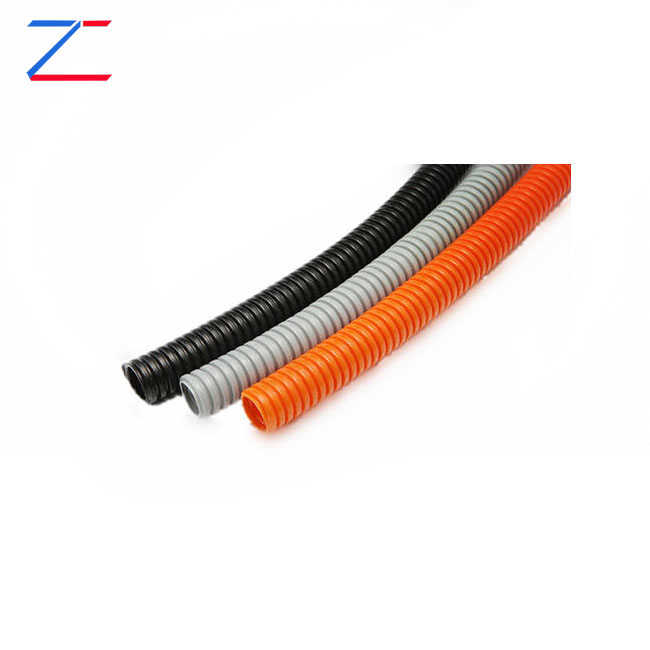
1. Selecting the Right Size
The internal diameter (ID) of the conduit is paramount. A conduit that’s too small will make cable pulling difficult and risk damaging insulation, while one that’s too large is inefficient and costly. Follow this simple process:
-
Calculate Cable Fill: Determine the total outer diameter (OD) of all cables to be routed. For multiple cables, a good rule of thumb is that the total cross-sectional area of the cables should not exceed 40% of the conduit’s internal area.
-
Consider Future Expansion: Always account for potential additional wires. Upsizing slightly can save significant hassle later.
-
Use a Sizing Guide: Consult the table below, based on Zhechi's standard product range, for a quick reference.
| Application Example | Recommended Zhechi Conduit Size (Inner Diameter) | Suitable For |
|---|---|---|
| Data/Network Cables (Cat6, Fiber) | 10mm - 16mm | Office cabling, telecom patches |
| Automotive Wiring Harnesses | 5mm - 13mm | Engine bays, vehicle interiors |
| Industrial Power Cables | 20mm - 40mm | Machinery, control panels |
| Outdoor & Landscape Lighting | 16mm - 25mm | Burial or exposed runs |
2. Choosing the Optimal Material
The operating environment dictates the material. Zhechi offers high-performance conduits in several polymers, each with distinct advantages:
-
Nylon (PA6/PA12): Excellent abrasion resistance, high mechanical strength, and good performance in oils and fuels. Ideal for demanding automotive and robotics applications.
-
Polyethylene (PE): Superior flexibility, excellent moisture and chemical resistance. Perfect for underground burial and outdoor installations.
-
Polypropylene (PP): Cost-effective, good chemical resistance, and performs well in a wide temperature range. Suitable for general-purpose industrial wiring.
Corrugated Conduit FAQ
Q: Can Corrugated Conduit be used in high-temperature environments?
A: Yes, but material selection is critical. Standard Zhechi Nylon conduits can withstand continuous temperatures up to 125°C, while special high-temperature variants are available for more extreme conditions. Always check the material's datasheet for its specific thermal rating.
Q: Is it necessary to use inner liners or pull cords with Corrugated Conduit?
A: For shorter runs with few bends, it may not be necessary. However, for longer distances or complex routes, Zhechi highly recommends using a pull cord or selecting our pre-lubricated conduit options. This significantly eases installation and prevents cable jacket abrasion.
Q: What is the difference between split and non-split Corrugated Conduit?
A: Non-split conduit is a continuous tube for new installations where cables can be threaded through. Split conduit, a specialty of Zhechi, features a longitudinal opening that allows it to be snapped over existing wiring without disconnecting cables, making it ideal for retrofits and maintenance.
Selecting the right Corrugated Conduit is a technical decision that impacts your project's durability and safety. By carefully evaluating the size requirements and environmental conditions, you can ensure optimal protection for your cables. As a trusted partner, Zhechi provides not just products, but engineered solutions backed by extensive technical support.
Contact us today with your application details. Our experts at Zhechi are ready to help you specify the perfect conduit solution for your specific needs.
