

What Are the Key Advantages, Functions and Future Trends of PVC Air Ducts?
2025-10-30
PVC air ducts are revolutionising ventilation and HVAC systems by offering a modern alternative to traditional metal or fibregreglass ductwork. This article explores what PVC air ducts are, why they matter in today’s installations, and how they deliver value — with a deep-dive into product parameters, benefits, applications, and emerging trends.
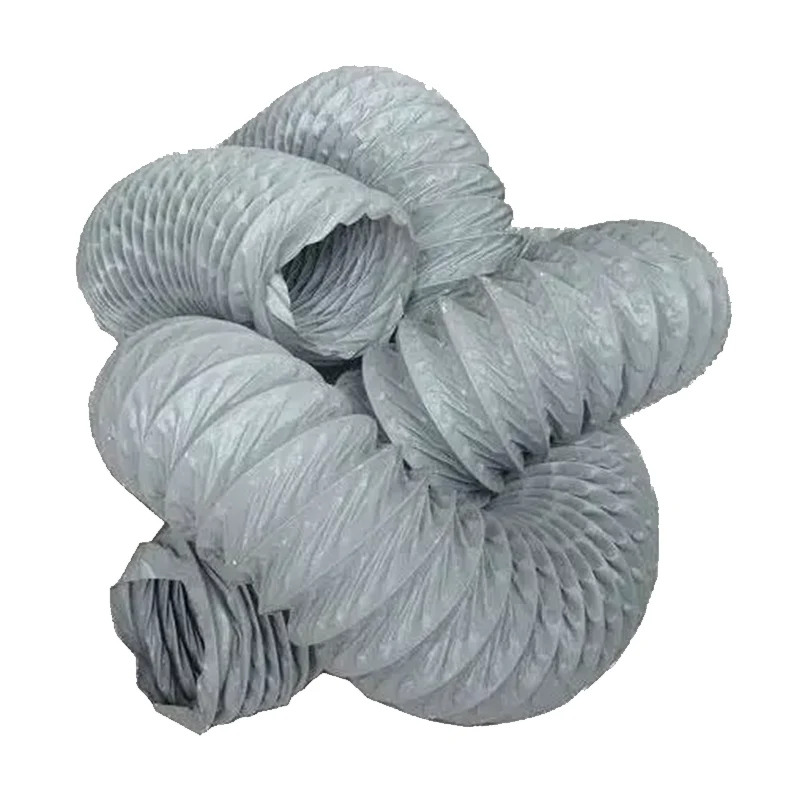
Parameters of the typical product are summarised in the table below for clarity and professionalism:
| Parameter | Specification |
|---|---|
| Material | Polyvinyl Chloride (PVC) |
| Shape & Size | Rectangular or round ducts, customised lengths |
| Operating Temperature Range | Typically up to ~60 °C (140 °F) for standard PVC; higher for specialised types |
| Surface Finish | Smooth interior for low airflow resistance |
| Corrosion & Chemical Resistance | Excellent resistance to moisture, chemicals and corrosive environments |
| Typical Applications | HVAC supply/exhaust, fume extraction, indoor climate control systems |
The primary purpose of this article is to present — from an experienced SEO-professional’s viewpoint — the deep value proposition of PVC air duct systems: what they do, why they are increasingly specified, how they should be selected and installed, and how the future of ductwork is evolving. Through four major nodes we will examine “What”, “Why”, “How”, and finally “Future trends”, while integrating common questions and clear answers for end-users and specifiers.
What is a PVC Air Duct?
In essence, a PVC air duct system consists of ventilation passages fabricated from polyvinyl chloride material designed to convey conditioned air, exhaust or ventilation flows in HVAC (heating, ventilation, air conditioning) or industrial ventilation systems. Unlike traditional galvanized steel or aluminium ductwork, the PVC variant brings unique material properties.
Specifically:
-
The choice of PVC ensures lighter weight and easier handling compared to metals.
-
Its smooth interior reduces airflow friction and thus contributes to improved system efficiency.
-
It resists corrosion, chemical attack, and moisture-related degradation in environments where metals may fail.
-
The system is adaptable: rectangular or round profiles, custom sizes, and can integrate with modern HVAC accessories or duct-networks.
From the specification point of view, when a project calls for ducting that must handle corrosive atmospheres (for example coastal, industrial or chemical service), or aims for reduced installation labour/time, PVC air ducts become attractive. They serve both supply and exhaust air conveyance, and in many cases can reduce maintenance overhead.
Common questions
Q: Can PVC air ducts be used for high-temperature exhaust systems?
A: Standard PVC typically has a limiting temperature (see table above) and may soften or degrade above about 60 °C (140 °F) in standard formulation.For high-temperature exhausts, one must evaluate higher-grade materials (e.g., CPVC or other coatings).
Q: Are PVC air ducts suitable for all building types (residential, commercial, industrial)?
A: Yes, in principle, but suitability depends on the ventilation requirements, temperature of the airstream, corrosivity of ambient, code compliance and acoustic/structural constraints. For example, some installations may require metals for fire-rating or for very high velocities; in such cases PVC may need additional treatment or may not be appropriate.
Why Choose PVC Air Ducts?
From a specification and performance standpoint, the “why” covers several major advantages which together justify the selection of PVC air ducts in many modern HVAC and industrial ventilation systems.
-
Corrosion and Chemical Resistance
Traditional metal ductwork can corrode over time especially in moist, salty or chemical‐rich atmospheres. PVC resists these challenges.In particular, coated duct versions emphasise this benefit. -
Weight and Ease of Installation
PVC is lighter than metal equivalents, which reduces structural supporting requirements, simplifies transport and installation, and lowers labour costs. -
Interior Smoothness and Flow Efficiency
The smooth internal surface of PVC ducts reduces airflow resistance, which can enhance system performance and reduce energy consumption. -
Reduced Maintenance and Life-Cycle Costs
Less corrosion, fewer joints (in certain systems), and compatible fittings contribute to reduced maintenance intervals. Over the lifetime of the installation, the combined effects of durability, efficiency and lower repair costs give a favourable lifecycle cost analysis. -
Energy Efficiency and Airtightness
Plastic ducting (including PVC) offers improved airtightness compared with some older systems, reducing leakage losses and improving building envelope performance. -
Adaptability and Design Flexibility
PVC systems can be customised: profiles, lengths, accessories, coatings. This flexibility supports diverse applications (industrial, commercial, even some residential). For example, in dust/fume extraction or chemical-plant ventilation PVC hoses and ducts are common.
Given these advantages, specifying PVC air ducts is often justified when the environment and operational parameters align (e.g., moderate temperature streams, corrosive/mist environments, building owners aiming for long-term performance).
However, it is necessary also to understand limitations — for instance, temperature limitations, fire and smoke performance, acoustic behaviour (some metal ducts may perform better acoustically).
How to Select, Install and Maintain PVC Air Ducts
Successfully deploying PVC air ducts requires careful attention to specification, installation best practices and maintenance regimes. This section breaks down how to ensure optimal performance.
Selection Considerations
When selecting PVC air ducts, the following factors should be reviewed:
-
Operating air temperature and pressure: ensure the PVC grade is rated for the expected conditions. Standard PVC may not suit very high temperature or high-pressure systems.
-
Chemical / moisture exposure: if the airstream or ambient includes humid, corrosive, salt-laden, or chemical-laden air, select sufficiently resistant PVC or coated versions.
-
Airflow velocity & system design: ensure the duct cross-sections, fittings, and installation minimise turbulence and leakage. The smooth interior of PVC helps, but design is still critical.
-
Fire, smoke and code compliance: confirm local building codes and HVAC standards accept PVC ducts for the intended use (especially in commercial buildings).
-
Acoustic performance: if noise transmission is a concern (e.g., quiet offices, theatres), evaluate the acoustic characteristics of the duct material and whether lining or treatments are required.
-
Joining, sealing and structural support: PVC ducts may require specific jointing methods (e.g., solvent welding, mechanical couplings). Also consider thermal expansion (PVC expands more than metals) and mount accordingly.
-
Lifecycle and maintenance access: ensure access for inspection, cleaning, and maintenance. While PVC resists corrosion, dust build-up, vibration and joint movement still require attention.
Installation Guidelines
-
Use manufacturer-approved fittings, brackets and hangers sized appropriately for PVC duct weight and anticipated loads.
-
Account for thermal expansion: PVC has a higher coefficient of expansion than metal, so suspension points and support spacing must accommodate movement.
-
Ensure joints are properly sealed to maintain airtightness and avoid leakage. Leakage reduces system efficiency and can defeat the benefits of PVC's smooth interior.
-
Protect against UV exposure if the ducts are outdoors or in sunlight-rich areas: prolonged UV exposure can degrade some PVC compounds.
-
Coordinate with insulation and acoustical requirements: if ducts carry cold air or must be acoustically treated, wrap or line appropriately.
-
Inspect post-installation for proper alignment, sag, secure supports, and ensure duct interior is clean before commissioning the system.
Maintenance & Operational Best Practices
-
Routine inspections: check for sagging, loose supports, joint leakage, corrosion of adjacent components, dust accumulation.
-
Cleaning: while PVC resists many forms of corrosion, dust, debris or mould may accumulate inside ducts especially if air quality demands are high. Regular cleaning improves performance.
-
Monitor system pressures and airflow: ensure that airflow remains within design range, as increased resistance (due to buildup or blockage) reduces the benefit of the smooth interior.
-
Review service data: track energy consumption, maintenance costs and compare against baseline expectations — many installations using PVC ducts report lower maintenance and energy costs.
-
Long-term replacement planning: though PVC is durable, verify expected service life with manufacturer, consider environment and exposure factors, and plan for eventual replacement if system conditions change (for example if temperatures increase or chemical exposures evolve).
Future Trends and Outlook for PVC Air Ducts
Looking ahead, several trends will shape the market, specification practices and performance expectations for PVC air duct technology.
Trend A: Growing Adoption in Corrosive / Industrial Environments
As building owners and facility managers seek longer-life solutions for ventilation systems in harsher environments (coastal, chemical processing, food & beverage), PVC air ducts’ corrosion resistance is increasingly valued. Evidence shows that PVC coated ducts significantly reduce maintenance and downtime in such settings.
Trend B: Integration with Energy-Efficiency & Sustainable Design
The drive for energy-efficient buildings and tighter HVAC performance means ductwork must contribute positively. PVC air ducts, with smooth interiors and reduced leakage potential, support these goals. Combined with smart HVAC controls and monitoring, they become part of a holistic sustainable system.
Trend C: Customisation, Modularisation and Prefabrication
Prefabricated duct modules of PVC, tailored for specific HVAC zones, are increasingly used to reduce onsite installation time and labour. The lighter weight and easy handling of PVC make this workable. Also, custom curvature or shapes can be moulded or fabricated.
Trend D: Enhanced Material Formulations
Advances in PVC compounds, coatings and hybrid systems mean better temperature performance, fire-resistance or UV-resistance. For example, special PVC blends or coatings may raise the usable temperature range or enhance fire performance, expanding the application envelope.
Trend E: Increased Emphasis on Indoor Air Quality (IAQ) and Clean-Air Systems
As ventilation systems are scrutinised for air quality, cleanliness and hygiene (especially in healthcare, clean-rooms, laboratories), ductwork materials that minimise microbial growth, particulate entrapment and leakage become critical. PVC air ducts, with non-porous interiors and chemical resistance, are well-positioned in this segment.
Trend F: Lifecycle Cost Modelling & Digital Monitoring
Owners increasingly demand transparent lifecycle cost models (installation cost + maintenance + energy + replacement) and real-time monitoring of HVAC systems. PVC air ducts’ lower maintenance demands and installation ease contribute favourably to these models, and integrated sensors in ductwork assemblies will become more common.
FAQs – Frequently Asked Questions
Q: How long can a PVC air duct last under normal operating conditions?
A: Under appropriate conditions (moderate temperatures, non-abrasive airflow, good installation), PVC air ducts can offer service life in the range of 10-20 years or more. For example, flexible PVC ducting in some industrial applications is estimated to last 15-20 years if indoor and not continuously flexed.
Q: What limitations should be considered when specifying a PVC air duct system?
A: Key limitations include maximum operating temperature (standard PVC may soften above ~60 °C/140 °F), fire and smoke performance (some jurisdictions may require non-combustible ducts), acoustic performance (thin-walled PVC may transmit noise more than metal or lined ducts), thermal expansion (PVC expands more than metals) and UV degradation (if exposed to sunlight). Proper evaluation during design phase is required.
Conclusion
In summary, PVC air duct systems represent a high-value option in modern ventilation and HVAC design, offering durability, efficiency, ease of installation and lifecycle cost advantages — especially where corrosive environments, reduced installation effort or improved energy performance are important. Understanding the product parameters, selecting the right specification, following best installation and maintenance practices, and aligning with future trends ensures that such systems deliver maximum value.
For specialist solutions, expertise and customised supply of PVC air duct systems, please turn to Guangdong Geli Air Duct Manufacturing Co., Ltd. Contact us to explore how their systems can be integrated into your next project.
