
What Makes Marine Spiral Cable a Critical Component in Modern Maritime Systems?
2025-11-21
Marine operations demand equipment that can withstand extreme conditions while maintaining reliability. Marine spiral cable, also known as coiled or retractable marine cable, plays a pivotal role in ensuring efficient power transmission and signal integrity aboard ships, yachts, and offshore installations. Its unique spiral design allows for flexibility, space-saving storage, and durability in environments exposed to saltwater, vibrations, and temperature fluctuations.
What is a Marine Spiral Cable and How Does It Differ From Standard Cables?
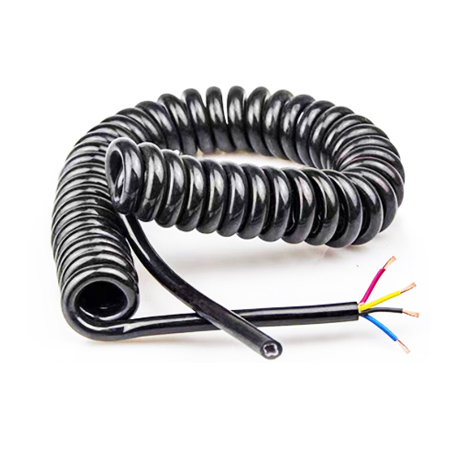
Marine spiral cables are a specialized subset of electrical and signal cables designed for environments requiring repeated extension and retraction. Unlike conventional straight cables, their coiled structure provides several key advantages:
-
Space Efficiency – Spiral cables contract when not in use, minimizing clutter and allowing tight storage areas.
-
Flexibility – They can extend without excessive strain, reducing the risk of insulation damage or conductor breakage.
-
Durability – Manufactured with materials resistant to UV radiation, saltwater, and mechanical stress, they can operate reliably in harsh maritime conditions.
-
Signal Integrity – High-quality copper or tinned copper cores ensure minimal signal loss for communication and control systems.
Key Specifications of Marine Spiral Cable
| Parameter | Typical Values & Features |
|---|---|
| Conductor Material | Copper / Tinned Copper |
| Insulation Material | PVC, TPE, or PUR |
| Voltage Rating | 300V – 600V |
| Operating Temperature | -40°C to +105°C |
| Bending Radius | 5× cable diameter (minimum) |
| Number of Cores | 2–24 cores available |
| Coil Retraction Length | 1–10 meters (depending on model) |
| Protection Class | IP67 or above (for water resistance) |
| Flame Retardancy | UL94-V0 compliant |
| Applications | Navigation systems, engine controls, deck equipment |
Marine spiral cables are often deployed in control panels, steering systems, lighting systems, and retractable sensor connections. The combination of flexibility, corrosion resistance, and robust insulation makes them a staple in both commercial shipping and recreational boating industries.
Why Are Marine Spiral Cables Essential for Maritime Safety and Efficiency?
Maritime operations involve constant movement, vibration, and exposure to corrosive environments. Traditional straight cables, when repeatedly bent or pulled, are prone to fatigue, short-circuits, and even complete failure. Marine spiral cables address these critical concerns by:
-
Reducing Mechanical Stress – The coiled form distributes tensile forces evenly, minimizing wire breakage and extending cable lifespan.
-
Enabling Compact Routing – They can navigate tight pathways without compromising performance, essential in crowded engine rooms or control cabins.
-
Enhancing Safety Compliance – Many spiral cables meet maritime safety standards such as ABS, DNV, and IEC regulations, ensuring reliability in mission-critical systems.
-
Supporting Automation and Signal Integrity – Coiled cables maintain consistent electrical properties under dynamic movement, which is crucial for sensors, remote controls, and automated equipment.
In addition, spiral cables contribute to operational efficiency by reducing downtime due to cable failures. Routine replacement or repair is minimized, saving labor costs and preventing potential safety hazards. The importance of these cables becomes particularly evident in harsh weather conditions or emergency situations where system reliability is non-negotiable.
How to Select, Install, and Maintain Marine Spiral Cables
Selecting the right marine spiral cable requires a detailed evaluation of the application, environment, and expected load. The following considerations are essential:
Selection Criteria:
-
Voltage and Current Requirements – Ensuring the conductor cross-section matches the electrical load to prevent overheating.
-
Environmental Resistance – Choosing insulation and protective sheaths capable of withstanding UV exposure, salt spray, and temperature fluctuations.
-
Bending and Extension Range – Selecting a cable with a suitable coil length and minimum bending radius for the specific installation.
-
Certification and Standards Compliance – Verifying adherence to IEC, UL, or marine-specific certification for safety and performance assurance.
Installation Best Practices:
-
Avoid excessive stretching beyond the specified extension length.
-
Ensure the cable coil is not twisted or kinked during installation.
-
Route cables away from sharp edges, high-heat areas, or abrasive surfaces.
-
Regularly inspect the cable for insulation cracks, conductor wear, or signs of corrosion.
Maintenance Guidelines:
-
Conduct visual inspections at regular intervals, especially after heavy usage or severe weather exposure.
-
Clean with freshwater to remove salt residue, particularly on exposed connectors.
-
Lubricate moving parts in cable reels or connectors if specified by the manufacturer.
-
Replace damaged cables promptly to maintain operational safety and reliability.
FAQ: Marine Spiral Cable
Q1: How long can a marine spiral cable reliably extend and retract without damage?
A1: The reliable extension cycle depends on the cable quality, material, and coil length. High-grade copper and TPE or PUR insulated cables typically withstand tens of thousands of extension-retraction cycles. Adherence to the specified retraction length and bending radius is critical to prevent insulation fatigue and conductor breakage.
Q2: Can marine spiral cables be used in high-voltage applications?
A2: Yes, but only if the cable is rated for the intended voltage. Standard marine spiral cables operate between 300V–600V, while specialized high-voltage models are available for more demanding applications. Always ensure the cable’s insulation and certification meet safety requirements for the electrical load.
Emerging Trends and Innovations in Marine Spiral Cable Technology
The future of marine spiral cables is closely tied to advances in materials, design, and integration with smart maritime systems. Current trends include:
-
Smart Cables with Embedded Sensors – Monitoring real-time temperature, current, and mechanical strain, enabling predictive maintenance.
-
Eco-Friendly Materials – Adoption of halogen-free, recyclable insulation to reduce environmental impact.
-
Enhanced Fire Retardancy – Improved coatings that meet stricter maritime fire safety regulations.
-
Integration with Autonomous Systems – Supporting automated navigation, engine control, and remote monitoring in next-generation vessels.
Marine spiral cables are evolving beyond simple power and signal transmission components to become critical enablers of maritime automation, safety, and operational efficiency. Companies investing in high-performance spiral cables gain a competitive advantage by ensuring longer cable lifespans, lower maintenance costs, and superior system reliability.
Liyuan, a leading manufacturer in the industry, provides premium marine spiral cables designed to meet stringent maritime standards. With advanced materials, precision engineering, and comprehensive testing, Liyuan ensures each cable delivers maximum durability and operational efficiency. For inquiries regarding custom specifications, product catalogs, or technical support, contact us to receive professional assistance tailored to maritime applications.
