

What Thickness of Rigid Felt is Best for Industrial Gaskets
2025-12-05
Selecting the correct thickness of Rigid Felt for industrial gaskets is critical for ensuring optimal performance, seal integrity, and longevity in demanding applications. A mismatch can lead to leaks, compression failure, or equipment damage. At Semicorex, we specialize in engineering high-performance Rigid Felt materials designed to meet precise industrial specifications. This guide will help you navigate the key considerations for choosing the perfect gasket thickness.
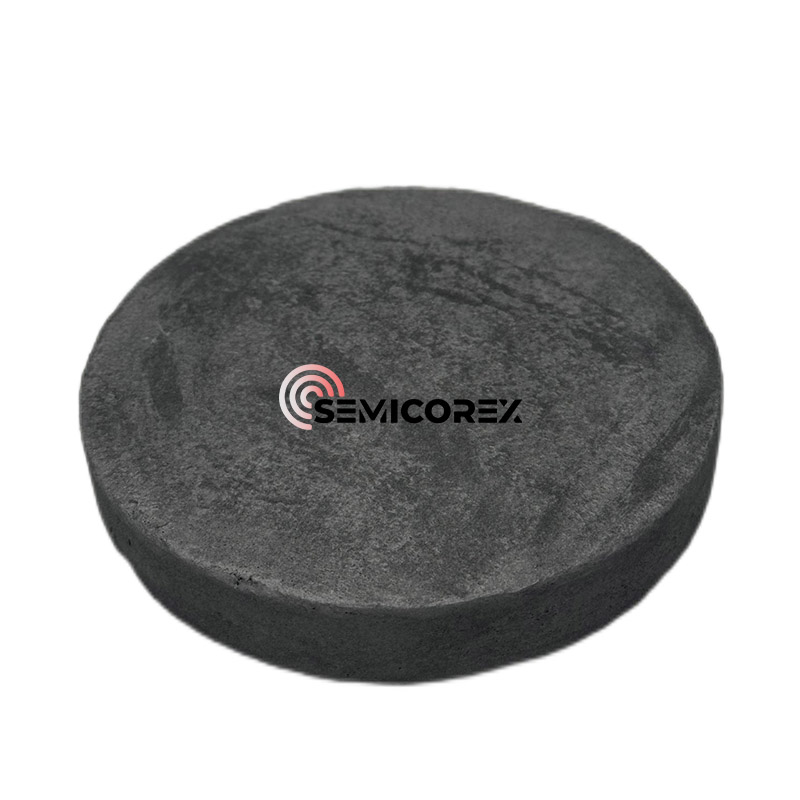
The ideal thickness depends on several factors related to the specific application. Key parameters from Semicorex products include:
-
Material Density: Ranging from 12 to 20 lbs/ft³ for varying pressure resistance.
-
Temperature Range: Our felts withstand continuous exposure from -150°F to 500°F (-100°C to 260°C).
-
Compression Recovery: Ensuring the gasket maintains its seal under cyclic loading.
-
Chemical Compatibility: Resisting oils, solvents, and mild acids common in industrial environments.
To correlate these properties with thickness, consider the following general guideline based on common industrial needs:
| Application Scenario | Recommended Semicorex Rigid Felt Thickness | Primary Rationale |
|---|---|---|
| Light-Duty Sealing, Low Pressure | 1/16" (1.6mm) to 1/8" (3.2mm) | Provides sufficient seal for static, low-stress joints without excessive bulk. |
| Standard Industrial Piping & Manifolds | 1/8" (3.2mm) to 1/4" (6.4mm) | Balances compressibility and gap-filling for uneven flanges under moderate pressure. |
| Heavy Machinery, High-Pressure Systems | 1/4" (6.4mm) to 1/2" (12.7mm) | Offers robust compression recovery and durability under significant vibrational stress. |
| Extreme Temperature & Chemical Exposure | Custom thicknesses (3mm to 15mm+) | Engineered to accommodate thermal expansion and maintain seal integrity in harsh conditions. |
Rigid Felt FAQ常见问题大全
Q: Can Rigid Felt gaskets be used for both static and dynamic sealing?
A: Semicorex Rigid Felt is primarily engineered for static sealing applications, such as pipe flanges, access panels, and machinery housings. Its structure provides excellent compression set recovery when compressed between two stationary surfaces. For dynamic seals involving rotating shafts or reciprocating motion, a different material specification is recommended.
Q: How do I determine the correct density alongside thickness?
A: Density and thickness work in tandem. For high-pressure applications, a thicker gasket made from a higher-density felt (e.g., 18 lbs/ft³) may be necessary to resist blow-out. For sealing uneven surfaces, a medium-density felt with greater thickness can better conform to irregularities. Our Semicorex technical team can provide detailed consultation based on your PSI and surface finish data.
Q: Does Semicorex offer custom-cut Rigid Felt gaskets?
A: Absolutely. Beyond offering sheets in standard thicknesses, Semicorex provides precision die-cutting, CNC machining, and custom fabrication services. We can produce gaskets to your exact dimensional drawings, including complex geometries, ensuring a perfect fit and eliminating on-site waste or cutting errors.
Choosing the right Rigid Felt gasket is a precise engineering decision that impacts safety and efficiency. With Semicorex, you gain more than just a material supplier; you partner with experts dedicated to providing technical solutions tailored to your challenge. Don't leave your sealing performance to chance.
Contact us today with your application specifications, and let our engineering team recommend the optimal thickness and material grade for your industrial gaskets.
