

Which Green Stretch Film Offers Reliable Protection and Sustainable Packaging Performance?
2026-11-02
Article Summary
As businesses face increasing pressure to reduce packaging waste and improve environmental performance, green stretch film has become an interesting option for manufacturers, distributors, warehouses, and logistics companies. However, choosing a suitable film involves more than simply selecting a green-colored roll. Buyers need to evaluate material composition, stretchability, puncture resistance, load stability, application requirements, and total packaging costs.
This guide explains what green stretch film is, how it works, which performance factors matter most, and how to identify a reliable supplier. It also explores the differences between conventional and more sustainable stretch film solutions, helping purchasing teams make informed decisions without compromising packaging protection.
1. What Is Green Stretch Film?
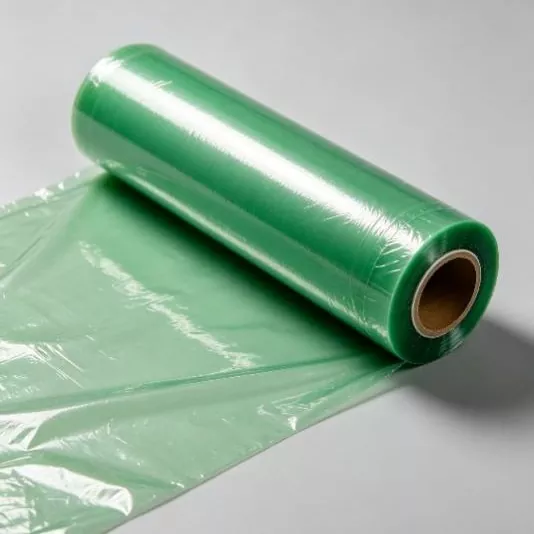
Green stretch film is a type of stretchable plastic packaging film associated with environmentally conscious packaging strategies. The term can describe film that is green in color, film made with recycled content, or film developed with material-saving and sustainability objectives. These descriptions are not interchangeable, so buyers should always clarify what a manufacturer means when using the term.
Like conventional stretch wrap, green stretch film is designed to stretch around products, cartons, and palletized loads. Once applied, its elastic recovery helps hold items together, reducing unwanted movement during storage, handling, and transportation.
Green Color Does Not Automatically Mean Eco-Friendly
One important purchasing consideration is the difference between appearance and environmental performance. A green-colored stretch film may simply contain color additives while using conventional plastic resin. Its color alone does not prove that it is recyclable, biodegradable, compostable, or manufactured with recycled materials.
Buyers should request clear information about:
- Material composition: Whether the film uses virgin resin, recycled resin, or a combination.
- Recycled content: The percentage of post-consumer or post-industrial recycled material, where applicable.
- Recyclability: Whether the film is compatible with available recycling systems in the target market.
- Environmental documentation: Relevant test reports, certifications, or supplier declarations.
- Material efficiency: Whether the film can achieve the required load protection with less material.
2. Why Are Businesses Considering Green Stretch Film?
Packaging decisions influence material consumption, transportation efficiency, product protection, and waste management. For companies shipping large quantities of goods, even small improvements in packaging efficiency can have a meaningful impact over time.
2.1 Supporting More Sustainable Packaging Strategies
Many manufacturers and distributors are reviewing their packaging materials to reduce unnecessary plastic consumption and improve resource efficiency. Stretch film is frequently used in warehouses and distribution centers, making it an important area for improvement.
Depending on its formulation and available recycling infrastructure, a suitable green stretch film may support initiatives such as recycled-material adoption, reduced film usage, and improved packaging waste management.
2.2 Maintaining Reliable Load Stability
Environmental considerations should never replace basic packaging requirements. Pallets still need to remain stable during forklift handling, warehouse storage, loading, and long-distance transportation.
A film that reduces material consumption but fails to secure the load can increase product damage, returns, and operational costs. Therefore, buyers should assess sustainability and functional performance together.
2.3 Improving Packaging Cost Efficiency
The lowest price per roll does not always represent the lowest packaging cost. Film thickness, roll length, stretching capability, breakage frequency, and application speed all influence the actual cost of wrapping each pallet.
For example, a thinner film may appear economical, but if operators need additional layers to achieve sufficient stability, the expected savings may disappear.
2.4 Meeting Customer and Market Expectations
International buyers increasingly ask suppliers about packaging materials, recycled content, waste reduction, and environmental documentation. Companies that can provide transparent packaging information may find it easier to meet customer procurement requirements.
3. What Materials Are Used in Green Stretch Film?
Understanding the material structure helps buyers distinguish between different green stretch film solutions. Most stretch films are based on polyethylene materials, although the exact formulation varies according to the intended application and manufacturing process.
3.1 Linear Low-Density Polyethylene (LLDPE)
LLDPE is widely used in stretch film manufacturing because it offers a useful balance of flexibility, tensile strength, stretchability, and puncture resistance. It can help films maintain contact with irregular loads while providing the elastic recovery needed for pallet stabilization.
Different grades and formulations can produce different mechanical properties. Therefore, buyers should not assume that all LLDPE stretch films perform identically.
3.2 Recycled Polyethylene
Recycled polyethylene may be incorporated into certain stretch film formulations to reduce reliance on virgin plastic resources. Both post-industrial and post-consumer recycled materials may be considered, depending on the product specification and manufacturing capability.
However, recycled resin quality can vary. Buyers should confirm whether recycled content affects clarity, color consistency, odor, tensile strength, puncture resistance, and processing stability.
3.3 Material-Saving Film Formulations
Another approach to improving packaging efficiency is producing films that deliver sufficient containment force with reduced thickness or lower material consumption. Advanced resin selection and film-layer design can help manufacturers optimize performance.
Such products must be tested under real packaging conditions. A thinner specification is only beneficial when it maintains the necessary load security.
| Material or Approach | Main Characteristics | Buyer Considerations |
|---|---|---|
| Virgin LLDPE | Consistent mechanical properties and flexible formulation options | Evaluate material efficiency and overall environmental impact |
| Recycled PE | Can incorporate recovered plastic materials | Verify recycled content and performance consistency |
| Reduced-Thickness Film | Potentially lowers material consumption per roll or pallet | Check puncture resistance and load containment |
| Colored PE Film | Provides visual identification and product differentiation | Color does not independently establish environmental benefits |
4. Which Performance Features Should Buyers Evaluate?
When purchasing green stretch film for industrial or commercial applications, technical performance should be a primary consideration. A suitable product needs to match the weight, shape, surface characteristics, and transportation requirements of the packaged goods.
4.1 Stretchability and Elastic Recovery
Stretchability describes how much a film can elongate before reaching its performance limits. Elastic recovery refers to its ability to return toward its original dimensions after stretching.
These characteristics influence the film's ability to maintain tension around a pallet. Buyers should ask manufacturers for recommended pre-stretch levels and test data under relevant conditions.
4.2 Puncture and Tear Resistance
Sharp corners, protruding edges, and irregularly shaped cartons can damage stretch film during wrapping or transportation. Good puncture resistance helps reduce film failure, while tear resistance helps prevent small defects from spreading.
For loads containing metal components, construction materials, machinery parts, or products with sharp edges, these properties deserve particular attention.
4.3 Holding Force and Load Containment
Holding force is essential for maintaining pallet integrity. If the film cannot provide adequate containment, cartons may shift or become unstable when moved.
Buyers should consider pallet weight, stacking height, load distribution, transportation distance, and handling frequency when selecting the required film performance.
4.4 Thickness and Roll Length
Film thickness is commonly expressed in microns (μm). Different applications require different thickness ranges, depending on load characteristics and wrapping equipment.
Roll length also matters because it affects how frequently operators need to replace rolls and how much film is available for each wrapping cycle.
4.5 Cling and Unwinding Performance
Cling helps adjacent film layers adhere to one another, supporting load security. At the same time, the film should unwind smoothly without excessive noise, blocking, or frequent tearing.
For automatic packaging lines, consistent unwinding and stable roll quality are particularly important because film defects can interrupt production.
| Performance Factor | Why It Matters | What to Verify |
|---|---|---|
| Stretchability | Supports efficient wrapping and film utilization | Elongation and recommended application tension |
| Puncture Resistance | Helps protect against sharp edges and damage | Puncture test results and practical load trials |
| Holding Force | Maintains pallet stability | Containment force under actual wrapping conditions |
| Thickness | Influences material consumption and strength | Micron specification and thickness consistency |
| Cling Performance | Helps film layers stay together | Cling consistency and storage behavior |
| Unwinding | Reduces interruptions during application | Roll consistency and machine compatibility |
5. How Does Green Stretch Film Compare with Conventional Film?
Green stretch film and conventional stretch film may have similar packaging functions. The main differences depend on the material formulation, recycled content, color, manufacturing process, and environmental claims associated with the product.
It is important to understand that green stretch film is not automatically stronger, weaker, more recyclable, or more expensive than conventional film. Actual results depend on the specific product specification.
| Comparison Item | Conventional Stretch Film | Green Stretch Film Options |
|---|---|---|
| Material | Often based on virgin polyethylene | May include recycled or optimized material formulations |
| Appearance | Commonly transparent or colored | May be green-colored or available in other colors |
| Mechanical Performance | Depends on resin grade and film design | Depends on formulation and manufacturing quality |
| Environmental Profile | Depends on material sourcing and disposal | May offer improvements through recycled content or material reduction |
| Recycling | Depends on local collection and recycling systems | Also depends on composition and local recycling infrastructure |
| Cost | Varies with specifications and market conditions | Varies with material selection, processing, and order volume |
6. Where Can Green Stretch Film Be Used?
Green stretch film can be considered for many packaging and logistics applications, provided its technical specifications are suitable for the products being handled.
6.1 Warehousing and Distribution
Warehouses use stretch film to secure cartons, bundled goods, and palletized products. Proper wrapping helps prevent packages from shifting during forklift operations and storage.
6.2 Food and Beverage Logistics
Manufacturers and distributors often use stretch film to stabilize beverage cartons, bottled products, packaged foods, and other palletized goods.
For these applications, buyers should confirm that the film is appropriate for the intended packaging environment and any relevant indirect-contact or handling requirements.
6.3 Industrial Manufacturing
Factories may use stretch film to bundle components, protect finished products, and prepare shipments for domestic or international transportation.
Industrial buyers should pay attention to puncture resistance, load weight, and the potential presence of sharp edges.
6.4 E-Commerce and Retail Fulfillment
Distribution centers handling large volumes of parcels and cartons can use stretch film to consolidate shipments and improve handling efficiency.
6.5 Building Materials and Furniture
Furniture, panels, pipes, and construction materials may require stretch wrapping to keep multiple items together. The selected film should match the load dimensions and surface characteristics.
7. How Can Businesses Choose the Right Specifications?
Choosing the right green stretch film starts with understanding the packaging operation. Instead of ordering based only on a general product name, buyers should prepare a clear technical specification.
Recommended Information for a Supplier Inquiry
- Product type and intended packaging application.
- Required film width and thickness.
- Roll length, net weight, and core diameter.
- Manual or machine-use requirements.
- Virgin or recycled material preferences.
- Required color and transparency.
- Estimated monthly or annual purchase volume.
- Destination market and applicable packaging requirements.
8. What Common Purchasing Mistakes Should Be Avoided?
Even experienced packaging buyers can encounter problems when selecting stretch film. Several common mistakes can increase material costs or reduce shipping reliability.
Mistake 1: Choosing Film Based Only on Color
A green appearance does not establish recycled content or environmental benefits. Always request material specifications and supporting documentation.
Mistake 2: Selecting the Thinnest Available Film
Reducing thickness without testing the load can result in punctures, tearing, and unstable pallets. The correct specification should balance material efficiency and load security.
Mistake 3: Ignoring Packaging Equipment
Film designed for manual wrapping may not be suitable for high-speed automatic equipment. Buyers should verify roll dimensions, unwinding characteristics, and machine compatibility.
Mistake 4: Overlooking Storage Conditions
Heat, direct sunlight, dust, and unsuitable storage conditions may affect film quality. Keep rolls in a clean, dry environment and follow the manufacturer's storage recommendations.
Mistake 5: Skipping Sample Testing
Product specifications on paper cannot replace actual packaging trials. Sample testing helps identify issues before a full production order is placed.
Mistake 6: Comparing Suppliers Only by Price
Low quotations may not reflect differences in roll length, actual film thickness, raw material quality, or manufacturing consistency. Buyers should compare equivalent specifications and calculate the cost per pallet.
9. How Can Buyers Evaluate a Reliable Manufacturer?
Choosing a suitable manufacturer is just as important as selecting the correct film. A reliable supplier should provide consistent product specifications, clear communication, and practical technical support.
9.1 Manufacturing Capabilities
Ask about production equipment, extrusion technology, available film structures, quality control procedures, and manufacturing capacity. These details help buyers understand whether the supplier can support their expected order volume.
9.2 Quality Control and Testing
Request information about how the manufacturer checks thickness, width, roll weight, tensile properties, puncture resistance, and appearance. Consistent inspection procedures help reduce batch-to-batch variations.
9.3 Transparent Material Information
For green stretch film, suppliers should clearly explain the resin composition, recycled content where applicable, and the basis of any environmental claims.
9.4 Customization and OEM Services
International buyers may require customized widths, thicknesses, roll weights, colors, packaging, or private-label solutions. Confirm the manufacturer's customization capabilities before finalizing the order.
9.5 Samples, Communication, and Delivery
A dependable supplier should be able to discuss sample availability, production lead times, packaging details, shipping arrangements, and after-sales support.
Clear communication is especially important for overseas orders, where specification misunderstandings can lead to unnecessary costs and delivery delays.
10. What Are the Future Trends in Sustainable Stretch Packaging?
The stretch packaging industry continues to explore ways to improve material efficiency, increase recycled content, and reduce packaging waste. Several developments are worth watching.
10.1 Greater Use of Recycled Materials
Manufacturers are exploring ways to incorporate recycled polyethylene into packaging films while maintaining acceptable mechanical properties. Material traceability and consistent resin quality will remain important.
10.2 Thinner Films with Improved Performance
Film engineering continues to focus on achieving the required packaging strength with less material. Advanced resin formulations and multilayer structures may help improve the balance between thickness and performance.
10.3 More Transparent Environmental Claims
Buyers are increasingly interested in measurable information rather than broad sustainability statements. Clear recycled-content declarations, test documentation, and product-specific environmental information can support more informed purchasing decisions.
10.4 Packaging Optimization Through Automation
Automated wrapping systems can help businesses control film tension, wrapping patterns, and material consumption. When the film and machine are properly matched, packaging operations may become more consistent and efficient.
10.5 Greater Focus on the Entire Packaging Lifecycle
Future packaging decisions are likely to consider raw material sourcing, production, transportation, product protection, and end-of-life management together. This broader approach helps businesses avoid improving one stage while creating problems elsewhere.
11. Frequently Asked Questions About Green Stretch Film
Q1: What is green stretch film used for?
Green stretch film is used to wrap and stabilize palletized goods, cartons, industrial products, and other shipments. Depending on its composition, it may also support packaging initiatives involving recycled materials or reduced plastic consumption.
Q2: Is green stretch film biodegradable?
Not necessarily. Green stretch film is generally a polyethylene-based product unless specifically formulated otherwise. Green color does not mean biodegradable. Buyers should request product-specific biodegradability or compostability test documentation before making such claims.
Q3: Is green stretch film recyclable?
Some polyethylene stretch films can be mechanically recycled where suitable collection and processing facilities exist. Recyclability depends on the film composition, additives, contamination, and local recycling infrastructure.
Q4: Can green stretch film contain recycled plastic?
Yes. Certain formulations can incorporate post-consumer or post-industrial recycled polyethylene. Buyers should confirm the actual recycled content percentage and request relevant supporting documentation.
Q5: Is green stretch film suitable for automatic wrapping machines?
Some green stretch films are suitable for automatic equipment, but compatibility depends on roll dimensions, thickness, stretching characteristics, unwinding behavior, and machine settings. Always conduct a machine trial before bulk purchasing.
Q6: What thickness should I choose for green stretch film?
The appropriate thickness depends on pallet weight, load shape, sharp edges, transportation conditions, and application method. Buyers should test different specifications to identify the most efficient option that maintains adequate load stability.
Q7: Can green stretch film be customized?
Many manufacturers offer customization options such as width, thickness, roll length, core size, color, packaging, and private labeling. Available options and minimum order quantities should be confirmed with the supplier.
Q8: Does recycled stretch film have the same performance as virgin stretch film?
Performance varies according to recycled resin quality, formulation, processing technology, and film structure. Some recycled-content films can meet specific packaging requirements, but buyers should compare actual test results and conduct application trials.
Q9: How should green stretch film be stored?
Store rolls in a clean, dry location away from direct sunlight, excessive heat, and physical damage. Follow the manufacturer's recommendations for storage temperature and handling.
Q10: What should I ask before ordering green stretch film in bulk?
Confirm material composition, recycled content, thickness, width, roll length, core size, mechanical performance, sample availability, minimum order quantity, production lead time, and shipping arrangements.
12. Find the Right Green Stretch Film Solution for Your Business
Selecting the right green stretch film requires a balance between packaging protection, material efficiency, environmental considerations, and purchasing costs. A suitable product should secure goods reliably, work smoothly with your packaging process, and meet your company's material and documentation requirements.
Rather than choosing a product based on appearance or price alone, compare technical specifications, verify material information, and test samples under actual operating conditions. Working with an experienced packaging supplier can also help simplify product selection and reduce purchasing risks.
Looking for a Reliable Stretch Film Supplier?
Whether you need standard stretch film, customized specifications, or packaging solutions for large-volume industrial applications, Yuhong is ready to discuss your requirements.
Share your preferred film thickness, width, roll specifications, application method, and estimated order quantity. Our team can help you explore suitable product options for your packaging needs.
Contact us today to discuss your project, request product information, and find a stretch film solution that supports reliable packaging performance and efficient operations.
Contact Yuhong