

Why Are PEEK Tubes Becoming the Preferred High-Performance Solution Across Critical Industries?
2025-12-03
Polyetheretherketone (PEEK) tubes are increasingly recognized as one of the most reliable high-performance thermoplastic solutions for engineering environments that demand exceptional mechanical strength, thermal endurance, and chemical stability. As industries shift toward materials capable of improving efficiency, longevity, and safety, PEEK tubes have rapidly gained global attention for replacing metals and lower-grade polymers in sectors such as aerospace, medical devices, electronics, semiconductors, energy, and industrial automation.
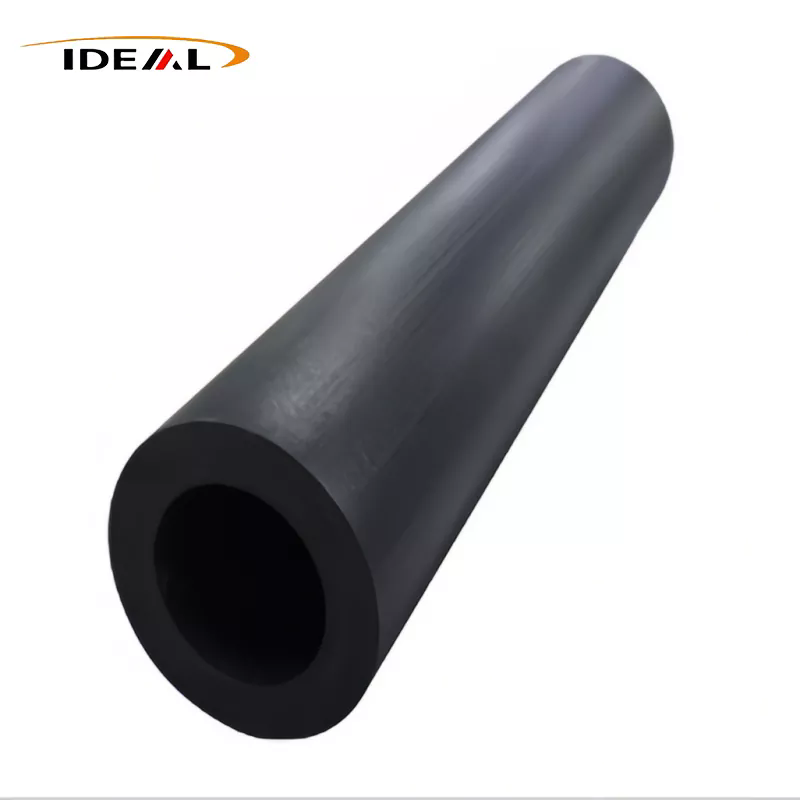
Product Overview and Technical Specifications: How Do PEEK Tube Parameters Influence Performance?
PEEK tubes are valued for combining high tensile strength with excellent heat resistance, maintaining stability in environments up to 260°C. Their intrinsic rigidity, creep resistance, and dielectric properties allow them to outperform fluoropolymers, nylons, and many metal alloys. Below is a consolidated overview of standard technical specifications for industrial-grade PEEK tubing.
PEEK Tube Technical Parameters
| Parameter Category | Typical Values / Description |
|---|---|
| Material Type | 100% Virgin Polyetheretherketone (PEEK) |
| Operating Temperature | Continuous use up to 260°C, peak performance up to 300°C |
| Tensile Strength | 90–100 MPa depending on grade |
| Flexural Modulus | 3.6–4.0 GPa |
| Melting Point | 343°C |
| Dielectric Strength | ≥20 kV/mm |
| Chemical Resistance | Resistant to acids, bases, hydrocarbons, solvents; unaffected by steam |
| Friction Coefficient | Low, enabling smooth mechanical movement |
| Radiation Resistance | Outstanding resistance to gamma and X-ray exposure |
| Biocompatibility | Compliant with ISO 10993 for medical-grade variants |
| Dimensional Options | ID 0.2 mm–60 mm; OD 0.5 mm–100 mm; custom sizes available |
| Color Availability | Natural, black, custom engineering colors |
These specifications underline how PEEK tubes maintain structural integrity in environments where other plastics deform or degrade. Their combination of stiffness, heat tolerance, and chemical durability positions them as a strong choice for replacing stainless steel or PTFE in precision systems.
Performance Advantages and Functional Applications: How Do PEEK Tubes Deliver Superior Value in High-Demand Systems?
PEEK tubes are engineered to support a wide range of operational functions, with core advantages that contribute to improved reliability, performance, and cost-efficiency.
How Do PEEK Tubes Improve System Durability?
Their inherent toughness and fatigue resistance enable long-term use under cyclical stress, making them ideal for dynamic components such as bushings, precision guiding tubes, and actuator conduits.
How Do PEEK Tubes Enhance Thermal Stability?
The 260°C continuous operating tolerance ensures performance in heating systems, engine compartments, high-temperature sensors, semiconductor equipment, and industrial furnaces—environments where conventional plastics fail.
How Do PEEK Tubes Offer Chemical Resistance Unmatched by Metals and Other Polymers?
PEEK resists a wide variety of corrosive agents, eliminating deterioration that commonly affects metals in chemical processing, oil and gas, and laboratory systems. This also reduces the need for protective coatings.
How Do PEEK Tubes Support Electrical and Electronic Safety?
Their dielectric strength, low moisture absorption, and insulation stability make them suitable for high-voltage housings, laser systems, connectors, and microcircuit protection.
How Does Lightweight Design Contribute to System Efficiency?
PEEK tubes deliver high strength-to-weight ratios—ideal for drones, aerospace systems, and advanced robotics requiring minimized load with maximum mechanical integrity.
Why Are PEEK Tubes Increasingly Used in Precision Medical Devices?
Medical-grade PEEK is biocompatible, sterilizable, and radiolucent, allowing it to be used in catheter systems, spinal implants, minimally invasive surgical tools, and fluid management channels.
Key Application Industries
-
Aerospace and aviation components
-
Medical device manufacturing
-
Semiconductor and wafer processing
-
Oil, gas, and chemical pipelines
-
Electrical and electronics insulation
-
Automotive and powertrain systems
-
Industrial automation
-
Precision instrumentation and optical machinery
Across these industries, PEEK tubes serve as functional components such as insulating sleeves, protective shells, microfluidic channels, conduit systems, structural supports, and chemical transport lines.
How Is the Future of PEEK Tubing Shaped by Global Manufacturing Trends?
How Will the Semiconductor and Electronics Boom Increase PEEK Tube Demand?
As wafer sizes increase and production nodes shrink, equipment manufacturers are prioritizing materials with stable dielectric properties, outgassing control, and chemical resistance. PEEK tubes support ultra-clean environments, making them essential in future semiconductor lines.
How Will Medical Miniaturization Technologies Benefit from PEEK Tubes?
The global shift toward minimally invasive procedures and smart medical systems requires tubing materials that balance flexibility, purity, and sterilization compatibility. PEEK’s biocompatibility ensures safe implantation and long-term device reliability.
How Will Sustainability and Material Replacement Trends Affect Adoption?
PEEK tubes offer reduced lifetime maintenance compared to metals and less environmental impact due to lower replacement frequency. As industries move toward lightweighting and energy efficiency, PEEK becomes a strategic alternative.
How Will Automation and Robotics Drive New PEEK Tube Innovations?
Robots and automated systems require materials with predictable mechanical behavior and stable thermal expansion. PEEK tubes support sensors, motors, and micro-cabling systems with minimal distortion.
Future Outlook Summary
-
Increasing demand in aerospace and UAV components
-
Expansion in semiconductor wafer processing applications
-
Greater use in minimally invasive and implantable medical devices
-
Growth in electrical insulation and micro-electromechanical systems
-
Rising adoption in high-corrosion, high-temperature industrial operations
Common Questions About PEEK Tubes
Q1: How do PEEK tubes compare to PTFE tubes in high-temperature environments?
A1: PTFE tubes have excellent chemical resistance but typically soften around 200–220°C, causing dimensional deformation under stress. PEEK tubes remain structurally stable up to 260°C and maintain rigidity at elevated temperatures, making them more suitable for precision mechanical and thermal applications. Their mechanical strength is significantly higher, which ensures stable performance in dynamic or load-bearing systems.
Q2: How long can PEEK tubes last in environments with severe corrosion or high mechanical fatigue?
A2: In corrosive chemical environments, PEEK tubes can operate for years without deterioration due to their resistance to acids, bases, and hydrocarbons. When exposed to mechanical fatigue, they exhibit excellent creep resistance and can outperform metals in cyclical loading due to their inherent molecular stability. This extended lifespan reduces maintenance costs and improves operational safety.
How Can IDEAL Provide Precision-Engineered PEEK Tubes Tailored to Industrial Requirements?
As industries transition toward high-efficiency, high-precision, and long-service-life materials, PEEK tubes have emerged as a critical solution. Their unmatched performance in thermal resistance, chemical stability, structural strength, and electrical insulation positions them at the forefront of next-generation engineering materials.
Manufacturers seeking to enhance product reliability, reduce downtime, and optimize system performance are increasingly turning to PEEK tubing as a strategic upgrade. With the global shift toward automation, sustainability, and miniaturization, PEEK tubes will continue to redefine standards across aerospace, electronics, medical devices, and industrial technologies.
IDEAL specializes in providing custom-engineered PEEK tubes designed to meet strict dimensional tolerances and performance criteria. Whether the need involves micro-precision tubes for medical tools or high-strength tubing for advanced mechanical systems, IDEAL delivers dependable solutions supported by rigorous quality control and professional engineering expertise.
For technical specifications, custom orders, or application consultation, contact us to discuss how IDEAL can support your product development and manufacturing needs.
