
Why Are Wear-Resistant Ceramics Transforming Industrial Durability?
2025-11-21
Wear-resistant ceramics have become one of the most relied-upon protective materials across mining, steel, cement, power generation, and bulk material handling industries. Engineered through advanced sintering and precision forming processes, these ceramics are designed to withstand severe abrasion, high impact, extreme temperature fluctuation, and corrosive media—conditions where traditional steel liners, rubber components, or polymer coatings often fail prematurely. The purpose of this article is to explore what wear-resistant ceramics are, why they matter, how they function, and where the future of this material is heading.
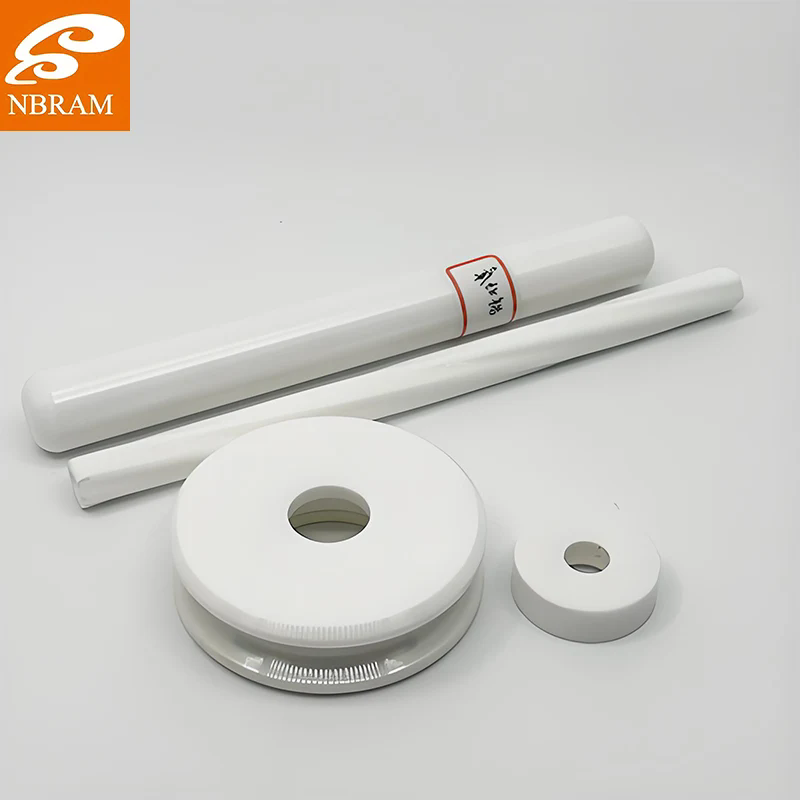
While industries are under intense pressure to reduce downtime, extend equipment lifespan, and minimize operational cost, wear-resistant ceramics provide a stable long-term solution. Their hardness exceeds that of most metallic alloys, their weight-to-strength ratio improves system efficiency, and their multi-layer composite structures enable superior bonding to steel substrates or directly to system housings.
To demonstrate material performance clearly, the following table outlines typical parameters of high-performance wear-resistant ceramics commonly applied in industrial protection systems.
Key Technical Specifications of Wear-Resistant Ceramics
| Parameter | Typical Value | Description |
|---|---|---|
| Hardness | ≥ 90–95 HRA | Extremely high surface hardness reduces abrasion from minerals, ores, and high-velocity particles. |
| Density | 3.55–3.70 g/cm³ | Ensures excellent structural strength while maintaining low weight. |
| Compressive Strength | ≥ 2,000–2,200 MPa | Prevents cracking or breakage under heavy impact loads. |
| Flexural Strength | ≥ 300–350 MPa | Resist deformation in high-stress mechanical systems. |
| Impact Toughness | ≥ 2.5–3.5 MPa·m¹/² | Designed for systems with repeated impact and vibration. |
| Temperature Resistance | Up to 1200°C (depending on grade) | Suitable for kilns, burners, high-temperature pipelines, and thermal cycling conditions. |
| Chemical Resistance | Excellent | Stable against acids, alkalis, solvents, and corrosive slurries. |
| Moisture Absorption | ≤ 0.05% | Ensures dimensional stability and long-term durability. |
| Available Shapes | Tiles, cylinders, hex tiles, liners, composites | Customizable for equipment-specific layouts. |
What Problems Do Wear-Resistant Ceramics Solve in Industrial Operations?
Why Are Industries Increasingly Replacing Steel and Rubber with Ceramic Liners?
Industrial material handling systems suffer from several major challenges:
-
Severe abrasive wear from ore, sand, coal, clinker, and aggregates
-
Impact damage from high-density materials falling from height
-
Chemical erosion from corrosive liquids and gas media
-
Thermal damage during constant heating/cooling cycles
-
Frequent shutdowns caused by rapid liner deterioration
Wear-resistant ceramics address these issues by offering:
Ultra-High Abrasion Resistance
Harder than steel and far more stable than rubber, ceramics significantly slow down surface erosion. They maintain structural integrity even under continuous friction or sliding wear.
Extended Equipment Service Life
Many industrial users report 3–10× longer lifespan compared with traditional materials. This not only reduces replacement frequency but also improves worksite reliability.
Lower Maintenance and Downtime Costs
With longer wear cycles and fewer unplanned replacements, factories achieve higher productivity, consistent output quality, and stable operating schedules.
Improved System Efficiency and Energy Reduction
The lightweight nature of ceramics reduces load on rotating or conveying systems, lowering energy consumption and improving machine dynamics.
Resistance to Corrosion and High Temperatures
Unlike metals, ceramics do not oxidize or corrode, making them ideal for chemically aggressive or high-heat environments.
Better Safety and Cleanliness
Smooth ceramic surfaces prevent material buildup, reducing dust generation, clogging, and contamination.
Taken together, wear-resistant ceramics serve as a long-term protective investment that solves multiple industrial pain points simultaneously.
How Do Wear-Resistant Ceramics Work and Where Are They Applied Most Effectively?
How Do Material Properties Influence Performance?
Wear-resistant ceramics perform due to a combination of structural and chemical characteristics:
-
High Hardness (Mohs 9 equivalent)
Prevents scratching, cutting, or gouging from abrasive particles. -
Stable Crystal Lattice Structure
Ensures consistent mechanical behavior under repeated stress. -
Inert Chemical Composition
Prevents reactions with acidic or alkaline substances. -
Low Thermal Expansion
Minimizes cracking under rapid temperature changes. -
High Compressive Strength
Allows them to absorb heavy impact without deformation. -
Precision-Engineered Microstructure
Reduces microcracks that lead to premature failure.
Where Are Wear-Resistant Ceramics Most Commonly Used?
Industries that face heavy abrasion or corrosion rely on ceramic liners and components to extend machine life. Typical applications include:
-
Mining and Quarrying
Chute liners, crusher components, ore separators, slurry pipes. -
Cement Industry
Cyclones, separator casings, clinker chute protection, mill housings. -
Power Generation
Ash handling systems, coal mills, furnace injectors. -
Steel Production
Aggressive particle conveyors, secondary refining systems. -
Bulk Material Handling
Bins, silos, hoppers, screw conveyors, chain buckets. -
Petrochemical & Chemical Processing
Corrosion-prone pipelines, reactor linings, filtration systems. -
High-temperature applications
Burners, kilns, thermal chambers.
How Are Ceramic Liners Installed?
Multiple installation methods support different equipment structures:
-
Mechanical fastening with bolts for heavy-impact areas
-
High-strength epoxy bonding for smooth surfaces
-
Rubber-ceramic composite panels for vibration-intensive systems
-
Welding studs for large steel backings
-
Modular installation for complex geometries
Proper installation ensures uniform stress distribution and ensures long-term durability.
Future Trends — Why Will Wear-Resistant Ceramics Continue to Dominate Industrial Protection Materials?
As industries move toward automation, sustainability, and smart manufacturing, demand for highly reliable protective materials continues to rise. Looking ahead, the development trajectory of wear-resistant ceramics is expected to follow several major trends:
Trend 1: Higher Hardness and Toughness Through Advanced Sintering
Emerging sintering technologies—such as hot isostatic pressing, nano-ceramic doping, and ultra-pure alumina refining—are steadily pushing the limits of hardness and impact resistance.
Trend 2: Composite Ceramic-Metal Systems
Hybrid structures (ceramic + steel, ceramic + rubber, ceramic + polymer) will offer better vibration absorption and improved installation flexibility.
Trend 3: Smart Surface Technologies
Future ceramics may incorporate sensors, conductive layers, or temperature-responsive coatings for predictive maintenance and automated monitoring.
Trend 4: Sustainable Manufacturing and Recycling
Eco-friendly production processes, low-carbon sintering, and reusable ceramic components will align with global environmental mandates.
Trend 5: Customized Structural Solutions for Complex Equipment
Industries increasingly require application-specific ceramic geometries, enabling better fit, higher coverage, and optimized performance.
Trend 6: Broader Adoption in Renewable Energy Industries
Wind, hydropower, biomass processing, and hydrogen production systems face significant wear challenges where ceramics play an expanding role.
The future of wear-resistant ceramics will be defined by performance innovation, smarter integration, and global industrial adoption.
Common FAQs About Wear-Resistant Ceramics
Q1: What is the typical lifespan of wear-resistant ceramic liners in mining or cement applications?
A1: In high-abrasion environments such as clinker handling, ore conveying, or cyclone separators, wear-resistant ceramics often last 3 to 10 times longer than steel or rubber liners. Actual lifespan depends on impact energy, particle hardness, velocity, temperature, and installation quality. Many facilities report multi-year performance cycles compared to months for traditional materials.
Q2: How do wear-resistant ceramics perform under high impact loads?
A2: Modern ceramics are engineered with enhanced toughness and high compressive strength exceeding 2000 MPa, which allows them to withstand repeated impact from falling ore or high-velocity particles. In applications where vibration or shock is severe, composite rubber-ceramic or steel-backed ceramic liners are used to distribute stress evenly and prevent cracking.
Why Wear-Resistant Ceramics Are the Future of Industrial Longevity
Wear-resistant ceramics offer a transformative upgrade for industries seeking durable, cost-saving, and high-efficiency protective solutions. Their hardness, temperature stability, chemical resistance, and long service lifespan make them an indispensable material for mining, power plants, steel processing, cement production, and any operation facing severe wear challenges.
By adopting advanced ceramic technologies, companies minimize downtime, reduce replacement costs, and ensure consistent production quality. As the industry continues to pursue higher performance standards, materials like ceramic composites and sensor-embedded liners will define the next generation of industrial protection technology.
For organizations seeking reliable and high-precision wear-resistant solutions, NBRAM delivers engineering-grade ceramic products designed for long-term durability, optimized installation, and consistent performance across the most demanding environments.
If there is a need for support, customized solutions, or product specifications tailored to specific equipment, contact us to obtain professional guidance and technical consultation tailored to operational requirements.
